Case Study 01
Francis Davis Millet: Bringing Art and History to the Web
fdmillet.org is a website I worked on with a small team of designers and developers. Our team consisted of two developers and two designers, and we collaborated closely with the site’s stakeholder to improve several key areas of the site.
Overview
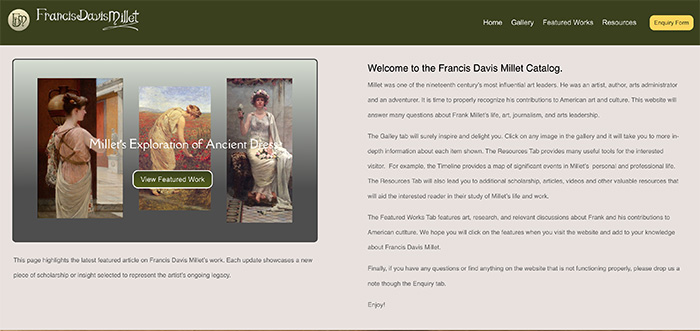
fdmillet.org is a website I worked on with a small team of designers and developers. Our team consisted of two developers and two designers, and we collaborated closely with the site’s stakeholder to improve several key areas of the site. The main goals included reworking the navigation to support a new menu item, creating a new Featured Works page to showcase recent research on Francis Davis Millet, and cleaning up the homepage to improve clarity, usability, and overall organization.
Planing & Team Roles
As a team, we got together and created a list of priorities, ranking tasks from most important to least important. Once we had our list, we shared it with the stakeholders to make sure we were all on the same page about what needed to be prioritized the most. Because we were working within a limited time frame, our main focus was completing the highest-priority tasks by the end of the semester.
Site Backup
One of the first challenges the stakeholder asked us to solve was creating a reliable way to back up the site in case anything went wrong. Since the site was built using WordPress, we implemented the UpdraftPlus plugin.
This allowed the stakeholder to create scheduled backups and restore previous versions of the site when needed. It also gave them a workflow similar to a development environment, where changes could be tested and then pushed live. This solution addressed a long standing challenge the stakeholders had faced, allowing them to revert changes if issues were introduced to the live site.
Navigation & Unexpected Issues
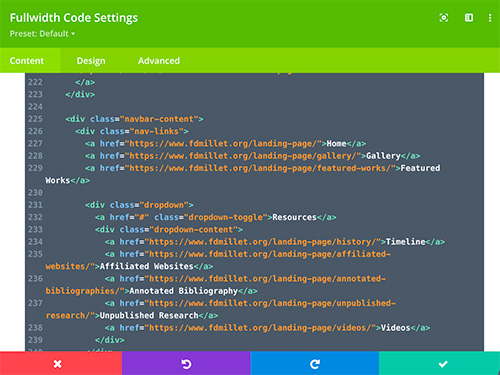
My next task as a developer was to move the Timeline navigation item into a dropdown menu under the Resources section. While this change was relatively simple, it revealed a larger issue within the site’s navigation system.
After making the necessary code changes in the global header module, I noticed that not all pages reflected the update. Some pages displayed the new navigation correctly, while others did not.
Root Cause & Solution
After investigating the issue, I discovered that the site relied heavily on the Divi page builder. Previous developers had created multiple different headers across the site instead of using a single global header module. As a result, our changes only applied to pages that happened to use the correct header.
To fix this, we went page by page across more than 100 pages replacing each header and setting it as a global module. Once completed, any future changes to the header would apply consistently across the entire site. This resolved a major structural issue for the stakeholder and significantly improved the maintainability of the website.
Media Loss
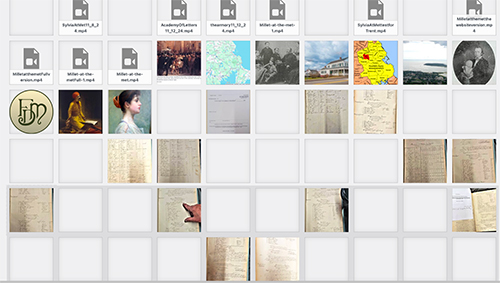
At this point in the project, we encountered a major setback. For reasons that are still unclear, a large portion of the site’s media library went missing. Over 100 images disappeared from the gallery, and all five videos across the site were broken one on the homepage and four in the Videos section under the Resources menu.
Recovery & Time Constraints
This issue forced our team to pivot and significantly impacted our remaining timeline. I explored multiple recovery options, starting with restoring the site from a previous backup. Unfortunately, while the site structure was restored, all of the images still returned 404 errors.
After further research, we discovered that restoring the media files directly from the hosting environment could potentially fix the issue. However, our stakeholder did not have access to their hosting account, which prevented us from restoring the media through traditional methods.
To work around this limitation, we extracted the backup ZIP files created by UpdraftPlus and used a WordPress plugin called WP File Manager to manually restore the missing images and videos. Once the media files were recovered, we went through the site page by page and manually re linked each broken image. While time consuming, this process ultimately restored the site’s content and prevented permanent data loss.
Featured Works Page implementation
Once the site was stable and the major issues were taken care of, we were finally able to focus on building the Featured Works page. The stakeholder wanted a way to upload a PDF and have it automatically format itself into a clean, web friendly layout.
After going back and forth a few times, we explained that fully converting PDFs into structured website content was outside the scope of the project and not realistic given our timeline. Instead of saying no outright, we worked on finding a solution that would still meet their needs.
We ended up implementing a WordPress plugin that allows the stakeholder to upload a PDF and display it directly on the site using a responsive viewer. While this wasn’t exactly the same as auto formatting the PDF into web content, it was easy to use, required very little setup, and fit within the time we had. Although a more custom solution would have been nice, this approach was realistic and maintainable. The stakeholder was happy with the result, and the Featured Works page launched with a workflow they could easily manage moving forward.
Conclusion & Reflection
Overall, this project was a valuable learning experience that combined teamwork, technical problem solving, and real world constraints. By the end of the semester, our team had improved the site’s navigation, stabilized its structure, implemented a reliable backup system, recovered critical media content, and successfully launched the Featured Works page.
Despite several unexpected challenges, we were able to adapt and deliver meaningful improvements that made the site more usable and maintainable for the stakeholder. This project gave me hands on experience working with WordPress, troubleshooting, and balancing stakeholder expectations with technical limitations and time constraints. It reinforced the importance of clear communication, planning, and flexibility when working on real client projects, especially when things don’t go as expected.